
TrailCore Education ERP for College & Institution Management
TrailCore Education ERP connects admissions, student records, programs, timetables, attendance, fees and faculty workflows in one institution management system. Explore LMS integration, document management, reporting and institution analytics. Book a demo to discuss your academic and administrative requirements.
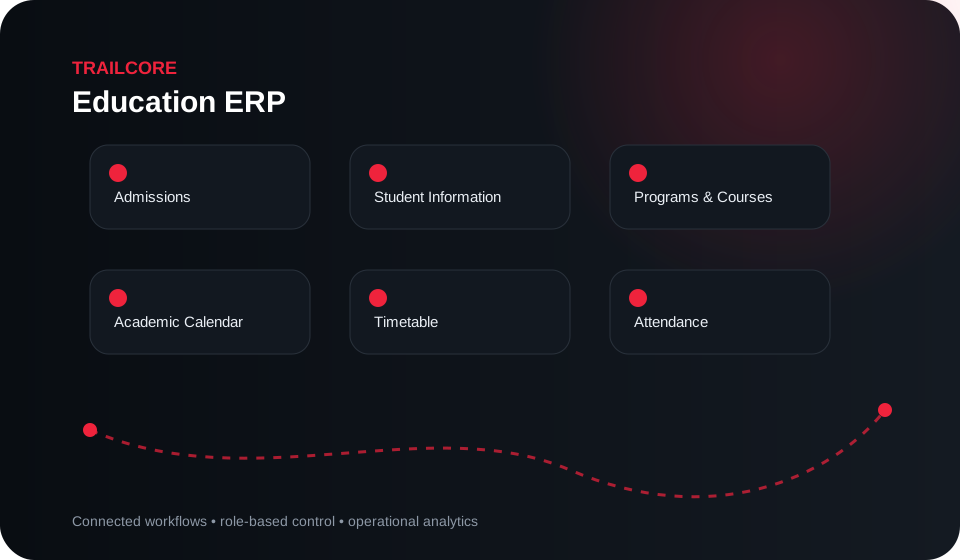
College ERP Features for Admissions, Attendance and Fee Management
Explore TrailCore Education ERP modules for admissions, student information, programs and courses, academic calendars, timetables, attendance, fees and faculty. Connect these workflows with documents, communication, LMS integration, reports and institution analytics. Configuration depends on your institution's processes and requirements.
Connect Student Records, Academic Workflows and College Administration
Workflow shown is representative. Configuration depends on the approved implementation scope.
From process discovery to controlled rollout.
A strong enterprise implementation starts with workflows and data ownership before configuration and go-live.
Discover
Map current processes, roles, controls, pain points and data sources.
Configure
Configure modules, workflows, permissions, integrations and reports.
Validate
Run controlled UAT against realistic operational scenarios and exceptions.
Roll out
Train users, migrate approved data and transition with defined support.
Designed for controlled adoption.
Deployment design is confirmed during discovery and depends on user roles, integrations, data ownership, security requirements and operating priorities.
Access & roles
Configure responsibilities and access around approved business roles and workflows.
Integration
Connect relevant systems and data sources through the appropriate approved integration method.
Auditability
Keep important operational actions and ownership visible within the configured business process.
Common questions
See how the workflow fits your operation.
Share your current process, user roles and priority challenges. We’ll focus the discussion on the relevant modules and implementation path.